
Summary:
|
Anyone who has dealt with ongoing sinus congestion, a constantly sore throat, or unexplained voice changes knows how annoying it can be when symptoms just keep going, with no clear answer . A lot of the time, an ENT specialist needs more than a quick standard examination to figure out what’s actually happening inside the nose, throat, or ears. And this is where an endoscope really helps, like a lot.
Over the last few decades, endoscopy has changed how doctors handle many ENT problems . Instead of leaning only on symptoms or an external look, specialists can now see directly into spots that used to be pretty hard to assess . The outcome is often a quicker diagnosis, a more precise treatment plan, and way less “wait, what’s going on” moments for patients.
Whether it’s for routine checkups, or for more advanced endoscopic surgery, endoscopy has turned into one of the most useful instruments in today’s ear, nose, and throat care.
What Is Endoscopy in ENT?
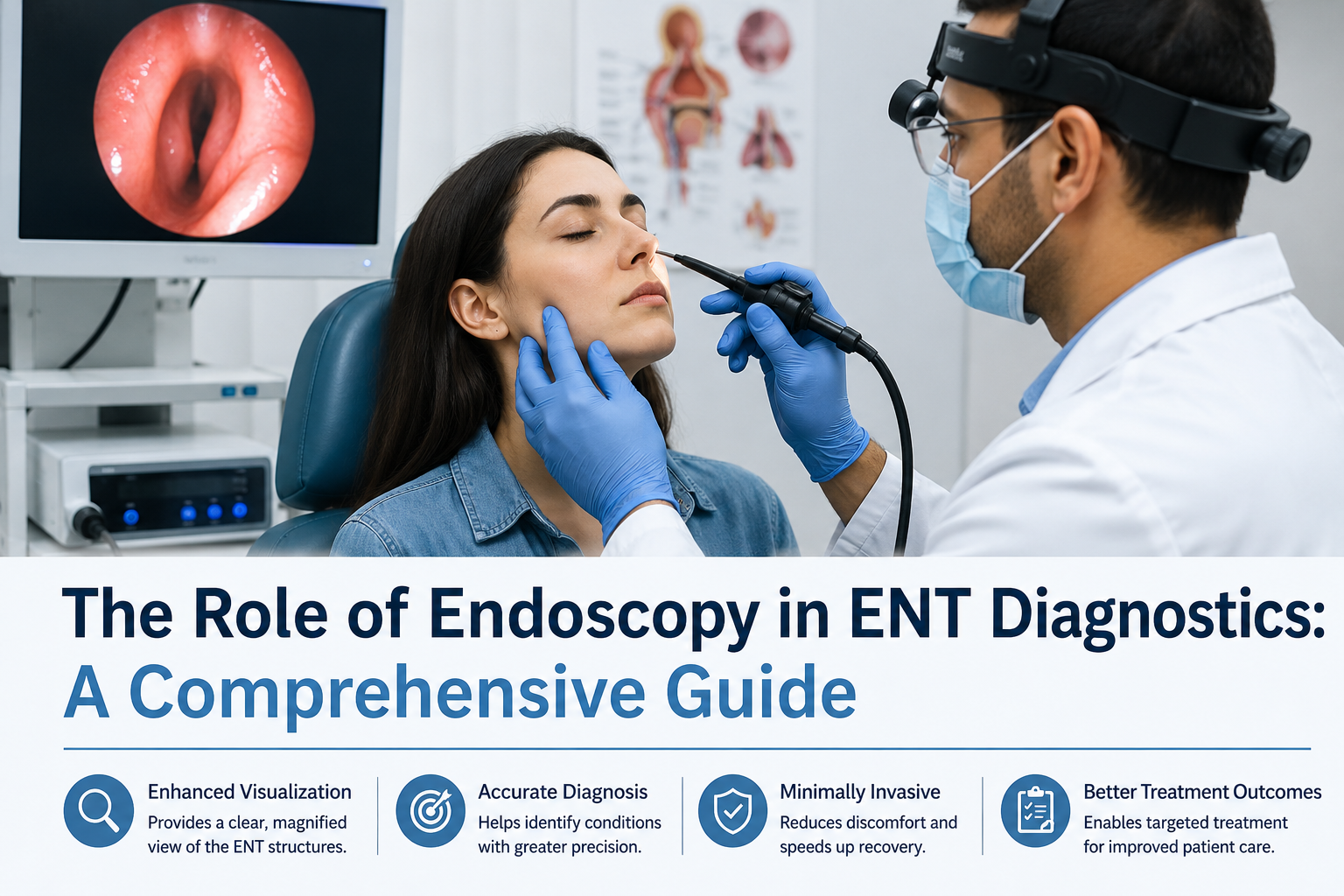
In simple terms, an endoscope is like a narrow tool, it comes with a light and a small camera. It helps ENT specialists to look at what is going on inside the nasal passages, the throat, and even the ear canals, all without having to do big cuts or those uncomfortable invasive probing steps.
Some endoscopes are flexible, and some are rigid. Which one gets used depends a lot on what area they need to check, and also on why you’re there in the first place. The images from the camera get shown on a monitor, so the physician can see the tissues, the passageways, and other structures that would normally stay out of sight.
For most patients, the whole thing feels way more manageable than they expected. A lot of these examinations happen right in the office, and they can finish in only a few minutes, pretty straightforward.
Common ENT Conditions Diagnosed with Endoscopy
Symptoms such as congestion, facial pressure, difficulty swallowing, or chronic throat irritation can point to several different conditions. Endoscopy helps narrow down the possibilities by providing a direct view of the affected area.
Chronic Sinusitis
People often think a sinus infection will sort of just resolve by itself. But when symptoms hang around for months, it might not be a simple situation, chronic sinusitis could be behind it.
An endoscopic sinus exam lets physicians look closely at the nasal passages and the openings of the sinuses. They can often spot swollen tissue, drainage pathways that are jammed, mucus that gets stuck , and signs of ongoing inflammation pretty quickly.
That up close look, gives doctors a better sense of whether medication , allergy control, or maybe additional ENT procedures might be needed.
Nasal Polyps
Nasal polyps are not always obvious during a standard examination. Some develop deeper within the nasal cavity, where they can quietly cause problems for months.
Patients may notice symptoms such as:
- Ongoing nasal blockage
- Reduced sense of smell
- Frequent sinus infections
- Difficulty breathing through the nose
Using an endoscope, an ENT specialist can identify these growths and determine their size and location. Early detection often leads to more effective treatment and may prevent future complications.
Throat Tumors
Persistent hoarseness or that kind of throat discomfort shouldn’t just be waved off, particularly if the signs don’t get better as time passes. An endoscopic check, kind of like a closer view, helps specialists see the throat area and the nearby structures clearly, without guessing. When there is abnormal tissue growth, it can often be spotted sooner than you would ever manage with only outside inspection, because the view is direct. Early diagnosis still counts as one of the biggest influences on how well treatment tends to work for people facing throat tumors.
How Endoscopy Enhances ENT Procedures
The biggest advantage of endoscopy is visibility.
When physicians can see structures clearly, they can work with greater precision. That precision has transformed many ENT procedures, making them safer and less invasive than they once were.
Rather than creating larger surgical openings, specialists can often reach treatment areas through natural pathways within the body.
Endoscopic Surgery in ENT
The rise of endoscopic surgery has changed treatment options for many common and complex ENT conditions.
Endoscopic Sinus Surgery
For patients who continue to struggle with chronic sinus infections despite medication, endoscopic sinus surgery may be recommended.
Using an endoscope, surgeons can locate blockages inside the sinuses and remove them with specialized instruments. This helps restore normal drainage and improve airflow.
Because the procedure avoids large external incisions, many patients find recovery more manageable than expected.
Endoscopic Ear Surgery
The structures of the ear are small and delicate, which makes visibility extremely important during treatment.
Endoscopic ear surgery provides detailed views that can assist in correcting problems such as chronic infections, eardrum damage, and certain middle ear conditions.
Many ENT specialists now prefer this approach because it allows them to work with greater accuracy while preserving healthy tissue whenever possible.
Diagnosis Techniques with Endoscopic Equipment
An endoscope is used in several specialized diagnosis techniques that help physicians evaluate symptoms more effectively.
Nasopharyngoscopy
Nasopharyngoscopy focuses on the nasal passages and upper throat.
A thin endoscope is inserted through the nose, allowing the physician to examine areas associated with chronic congestion, breathing difficulties, and recurring infections.
The procedure is commonly performed during routine ENT evaluations and typically takes only a few minutes.
Laryngoscopy
When voice problems persist, laryngoscopy is often the next step.
This examination allows doctors to inspect the larynx and vocal cords in detail. It can help identify inflammation, vocal cord abnormalities, growths, and other conditions affecting speech and swallowing.
For singers, teachers, public speakers, and anyone who relies heavily on their voice, this is often one of the most important diagnosis techniques available.
Benefits of Using Endoscopy in ENT Diagnostics
Minimally Invasive
One reason endoscopy has become so widely used is that it reduces the need for invasive exploration.
Many ENT procedures can be performed with little or no external incision, resulting in less discomfort for patients.
High Accuracy
The detailed images provided by modern endoscopic systems help specialists identify problems that might otherwise be missed.
This improved visibility often leads to faster diagnoses and more targeted treatments.
Short Recovery Time
Patients generally appreciate the fact that endoscopic examinations involve minimal downtime.
Even many forms of endoscopic surgery allow individuals to return to daily activities sooner compared to traditional surgical methods.
Preparing for an Endoscopic ENT Procedure
Before undergoing an examination or surgical procedure, patients should take a few simple steps:
- Inform their doctor about medications they currently use.
- Mention any allergies or previous reactions to anesthesia.
- Follow instructions regarding food and drink restrictions.
- Ask questions about risks, recovery, and expected outcomes.
- Arrange transportation if sedation is required.
Being prepared helps ensure the process goes as smoothly as possible.
Conclusion
The modern endoscope has become far more than a diagnostic device. It is now a central part of many ENT procedures, helping specialists identify conditions earlier and treat them more effectively.
From chronic sinusitis and nasal polyps to advanced endoscopic surgery, endoscopy continues to improve patient care through better visualization and more precise diagnosis techniques. For patients seeking answers to persistent ear, nose, or throat concerns, it often provides the clarity needed to move forward with confidence.
At Fort Worth ENT, endoscopic technology is used to help patients receive timely, accurate diagnoses and effective treatment recommendations. Whether you’re dealing with recurring sinus problems, voice changes, or other ENT-related symptoms, a comprehensive evaluation can help uncover the underlying cause and guide the right path to relief.
Schedule Your ENT Consultation Today
Contact Fort Worth ENT today to schedule an appointment and take the first step toward better ENT health.
FAQS
- What is an endoscopic ENT procedure?An endoscopic ENT procedure uses an endoscope to examine or treat structures within the ear, nose, or throat without the need for large surgical incisions.
- Is endoscopic surgery painful?Most patients report mild discomfort rather than significant pain. Recovery is typically easier than with traditional surgical approaches.
- What conditions can be diagnosed with ENT endoscopy?Common conditions include chronic sinusitis, nasal polyps, throat tumors, vocal cord disorders, swallowing difficulties, and recurring infections.
- How long does it take to recover from an endoscopic ENT procedure?Diagnostic examinations usually require little to no recovery time, while recovery from endoscopic surgery varies depending on the procedure performed.
- Is there any preparation required before an endoscopic examination?Patients may need to avoid eating or drinking beforehand and should discuss medications, allergies, and medical history with their ENT specialist.
Dr. Sean Callahan is a Board Certified Otolaryngologist at Fort Worth ENT & Sinus. Dr. Callahan performs surgery in all aspects of otolaryngology including pediatric ENT/Sinus, otology, rhinology, and sinus surgery, head and neck cancer surgery, salivary gland surgery, thyroid and parathyroid surgery, trauma, laryngology, allergy, and sleep medicine. Dr. Callahan completed his otolaryngology residency training at UT Southwestern Medical Center in Dallas in 2012. He was Board Certified by the American Board of Otolaryngology in 2013.
 How to Treat a Perforated Eardrum?