
Summary:
|
Most people don’t spend much time thinking about their eardrums until something goes wrong or they suddenly feel “off”. The eardrum is a thin, stretchy membrane that sits between the outer ear and the middle ear. It has a crucial job in hearing because it vibrates when sound waves reach it. Those vibrations then travel to tiny bones in the middle ear, and in a way the brain uses that input to understand what you’re hearing.
A perforated eardrum happens when a hole or a tear develops in this delicate membrane. The size of the perforation can really change. Sometimes the split is small, and it mends itself; other times it needs care from a clinician.
There are several common causes of a perforated eardrum:
Ear Infections
One of the most common causes is a middle ear infection. Fluid can build up behind the eardrum, creating pressure. If that pressure becomes severe enough, the membrane may rupture.
Injury
Trauma to the ear can also cause a perforation. This may occur after a direct blow to the ear, an accident, or from inserting objects such as cotton swabs into the ear canal.
Barotrauma
Rapid changes in pressure can place stress on the eardrum. Flying, scuba diving, and certain sports activities can occasionally lead to a rupture, especially when pressure isn’t equalized properly.
Regardless of the cause, timely evaluation is important to reduce the risk of complications and support healing.
Symptoms of a Perforated Eardrum
Symptoms can appear suddenly or develop over time depending on the underlying cause.
Common signs include:
- Sharp ear pain or sudden discomfort
- Fluid drainage from the ear
- Muffled hearing or hearing loss
- Ringing in the ears (tinnitus)
- Dizziness or balance problems
- A feeling of fullness in the ear
Some patients notice immediate relief from pressure after the eardrum ruptures, particularly if an infection caused the perforation. However, that relief should not be mistaken for complete healing.
If symptoms persist, a medical evaluation is recommended.
How to Diagnose a Perforated Eardrum
Figuring out a perforated eardrum is usually not too hard for a seasoned ENT specialist, once you get going. The whole process typically starts with a chat about what you have noticed, recent illnesses, injuries, whether there was travel, or any pressure-related activities, like diving or flying.
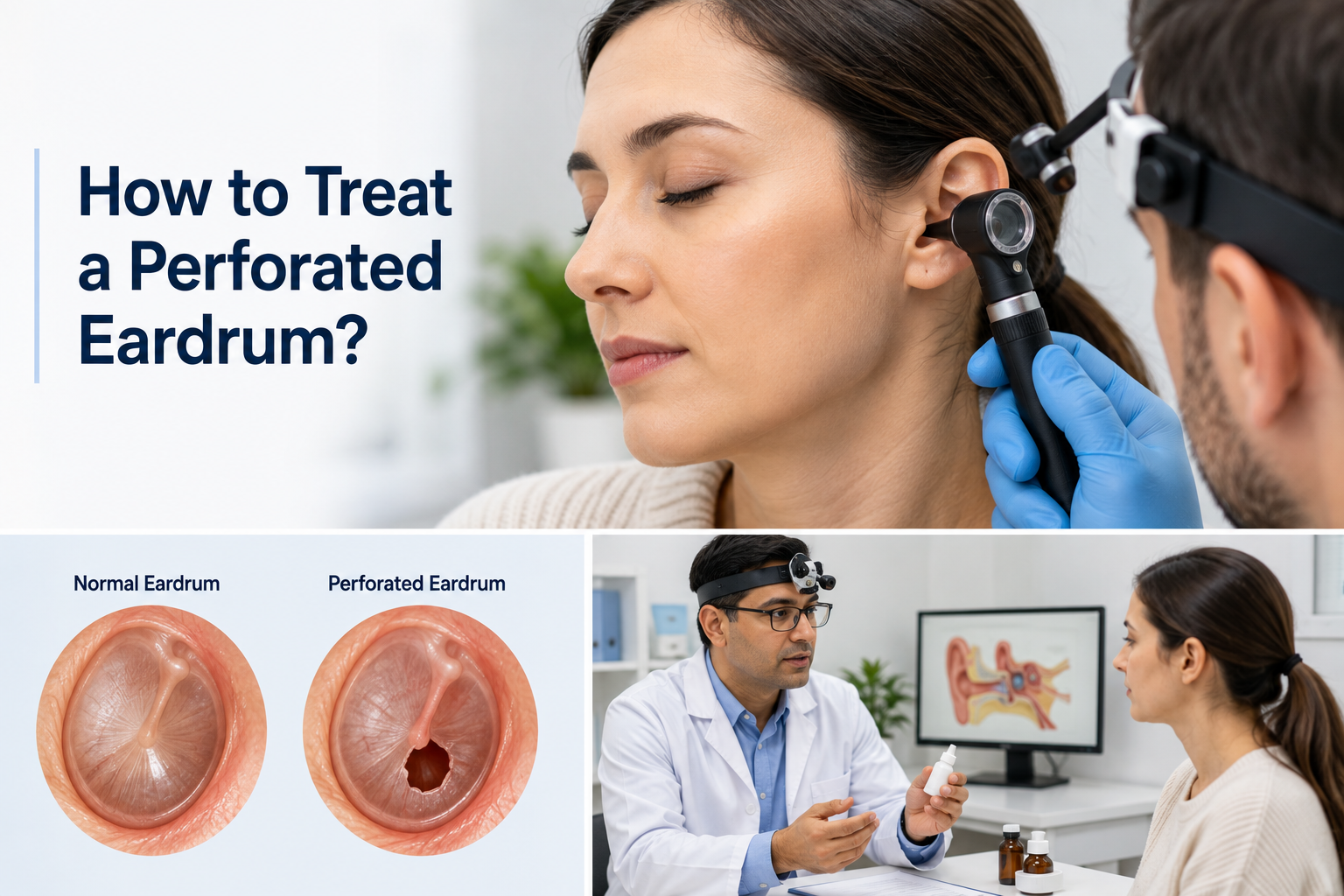
Then an ENT doctor will most often check the ear directly with an otoscope, which is that specialized tool that gives a clean look into the ear canal and the eardrum itself. In certain cases, they may suggest extra hearing tests because it helps to see if the perforation has led to hearing loss or has changed how the middle ear is working.
The aim isn’t just to see where the tear is, but also to figure out why it happened, and whether further treatment is needed.
Treatment Options for a Perforated Eardrum
The best perforated eardrum treatment depends on the size of the tear, the underlying cause, and whether symptoms such as infection or hearing loss are present.
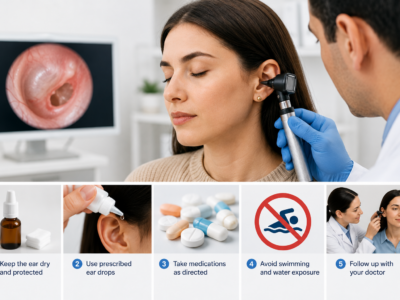
1. Observation and Home Care
Many perforated eardrums heal naturally without surgery.
When the perforation is small, physicians often recommend monitoring the ear while allowing the body’s natural healing process to occur.
Home care recommendations may include:
Resting
Avoid activities that place additional pressure on the ears, such as forceful nose blowing or certain strenuous activities.
Keeping the Ear Dry
Water entering the middle ear through the perforation can increase the risk of infection. Patients are often advised to use ear protection while showering and avoid swimming until healing occurs.
Pain Relief
Over-the-counter medications may help manage discomfort during the healing process.
Follow-up appointments are important to ensure the eardrum is closing properly.
2. Antibiotics for Ear Infections
When ear infections are involved, antibiotics may be prescribed as part of the treatment plan.
The goal is to eliminate infection, reduce inflammation, and create an environment that supports healing.
Even if symptoms improve quickly, patients should complete the full course of medication as directed.
Untreated infections can delay recovery and increase the likelihood of future complications.
3. Eardrum Repair Surgery
Some perforations do not heal on their own.
In these situations, surgical eardrum repair may be recommended.
The most common procedure is called tympanoplasty.
During this surgery, a surgeon uses a tissue graft to close the hole in the eardrum and restore the membrane’s integrity.
Repairing the Perforation
The graft acts as a foundation for new tissue growth, helping the eardrum heal properly.
Restoring Hearing
When hearing loss is related to the perforation, successful repair can often improve hearing function and reduce recurring infections.
Modern eardrum repair procedures are highly effective and are commonly performed on both adults and children when appropriate.
4. Treating Underlying Conditions
A perforated eardrum is sometimes the result of a larger issue.
Chronic sinus problems, allergies, recurrent ear infections, or Eustachian tube dysfunction may contribute to repeated ear problems.
Addressing these conditions can help reduce the risk of future perforations and improve overall ear health.
A comprehensive ENT evaluation often identifies contributing factors that may otherwise go unnoticed.
Preventing a Perforated Eardrum
While not every case can be prevented, certain habits can reduce risk.
Manage Ear Infections Promptly
Early treatment of ear infections can prevent pressure buildup that may damage the eardrum.
Avoid Inserting Objects Into the Ear
Cotton swabs, hairpins, and other objects can accidentally injure the ear canal and eardrum.
The ear is generally self-cleaning and rarely requires deep cleaning.
Protect Your Ears During Pressure Changes
When flying or diving, techniques that help equalize pressure can reduce strain on the eardrum.
Protective measures become especially important for individuals with frequent ear problems.
Conclusion
A perforated eardrum can be alarming, especially when symptoms such as pain, drainage, or hearing loss appear suddenly. Fortunately, many cases heal successfully with appropriate care and monitoring.
The key is understanding the cause and receiving the right treatment at the right time. Whether recovery involves observation, medication, or surgical eardrum repair, early evaluation can help prevent complications and support long-term hearing health.
At Fort Worth ENT & Sinus, patients receive expert diagnosis and personalized perforated eardrum treatment for ear injuries, chronic ear infections, hearing concerns, and related ENT conditions. If you’re experiencing ear pain, drainage, or changes in hearing, scheduling an evaluation can help you get answers and begin the path toward recovery.
Schedule an Appointment
Concerned about a possible perforated eardrum? Contact Fort Worth ENT & Sinus today to schedule an evaluation and receive expert care tailored to your needs.
FAQS
- How long does it take for a perforated eardrum to heal?Many small perforations heal within a few weeks. Larger tears may take longer and occasionally require surgical repair.
- Can a perforated eardrum cause permanent hearing loss?Most patients recover their hearing after the eardrum heals. However, severe injuries or untreated complications can sometimes result in long-term hearing problems.
- Is surgery always required for a perforated eardrum?No. Many perforated eardrums heal naturally with observation and proper care. Surgery is generally reserved for cases that fail to heal or cause ongoing symptoms.
- What are the risks associated with a perforated eardrum?Potential risks include recurring ear infections, hearing loss, chronic drainage, and balance disturbances if left untreated.
- How can I prevent a perforated eardrum?Prompt treatment of ear infections, avoiding objects in the ear canal, and protecting your ears during activities involving pressure changes can help reduce the risk.

Dr. Sean Callahan is a Board Certified Otolaryngologist at Fort Worth ENT & Sinus. Dr. Callahan performs surgery in all aspects of otolaryngology including pediatric ENT/Sinus, otology, rhinology, and sinus surgery, head and neck cancer surgery, salivary gland surgery, thyroid and parathyroid surgery, trauma, laryngology, allergy, and sleep medicine. Dr. Callahan completed his otolaryngology residency training at UT Southwestern Medical Center in Dallas in 2012. He was Board Certified by the American Board of Otolaryngology in 2013.
 Top Signs You Need to See an ENT Doctor