
Summary
|
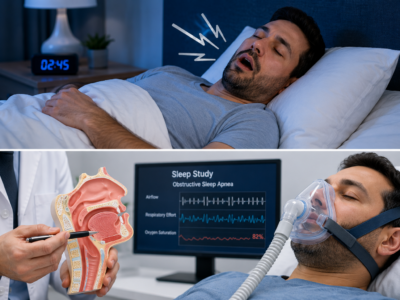
Snoring may be a sign of a more serious condition known as obstructive sleep apnea (OSA).
Snoring is common, but it can sometimes signal a more serious condition called obstructive sleep apnea (OSA). While simple snoring is caused by vibration of relaxed throat tissues during sleep, OSA involves repeated pauses in breathing that lower oxygen levels and disrupt sleep. Untreated OSA can increase the risk of heart disease, stroke, diabetes, and daytime fatigue. Evaluation by an ENT specialist and, when needed, a sleep study can provide an accurate sleep apnea diagnosis and determine the cause of snoring. Based on the findings, physicians can recommend appropriate obstructive sleep apnea treatment options ranging from lifestyle changes and oral appliances to CPAP therapy or surgery.
Insight into sleeping disorders and sleep apnea
Forty-five percent of normal adults snore at least occasionally and 25 percent are habitual snorers. Problem snoring and obstructive sleep apnea are more frequent in males and overweight people and usually worsen with age, peaking in up to 40% of 45-55-year-olds. Snoring may be an indication of obstructed breathing and should not be taken lightly. An ear, nose, and throat surgeon (otolaryngologist) at Fort Worth ENT & Sinus, can help you to determine where the anatomic source of your snoring may be, and offer solutions for this noisy and often embarrassing behavior.
What causes snoring?
The noisy sounds of snoring occur when there is an obstruction to the free flow of air through the passages at the back of the mouth and nose. This area is the collapsible part of the airway where the tongue and upper throat meet the soft palate and uvula. Snoring occurs when these structures strike each other and vibrate during breathing.
In children, snoring may be a sign of problems with the tonsils and adenoids. An otolaryngologist should examine a child who snores, as they may be suffering from obstructive breathing during sleep. This has been shown to be associated with health and development problems. Your otolaryngologist may recommend a tonsillectomy and adenoidectomy to return the child to full health.
People who snore may suffer from:
- Poor muscle tone in the tongue and throat: When muscles are too relaxed, the tongue falls backwards into the airway, or the throat muscles draw in from the sides to narrow the airway. Some relaxation is natural during deep sleep, but may become a problem if exacerbated by alcohol or drugs.
- Excessive bulkiness of throat tissue: Children with large tonsils and adenoids often snore. Overweight people may have excess soft tissue in the neck that can lead to airway narrowing. Cysts or tumors are rare causes of airway narrowing.
- Long soft palate and/or uvula: A long palate narrows the opening from the nose into the throat. The excessive length of the soft palate and/or uvula acts as a noisy flutter valve during relaxed breathing.
- Nasal Obstruction: A stuffy or blocked nose requires extra effort to pull air into it. This creates an exaggerated vacuum in the throat that pulls the floppy tissues of the throat inward. Snoring and occasional airway obstructions are the result. Nasal obstruction can be due to many causes, including deformities of the nose or nasal septum, enlarged turbinates or nasal polyps
Why is snoring something to be concerned about?
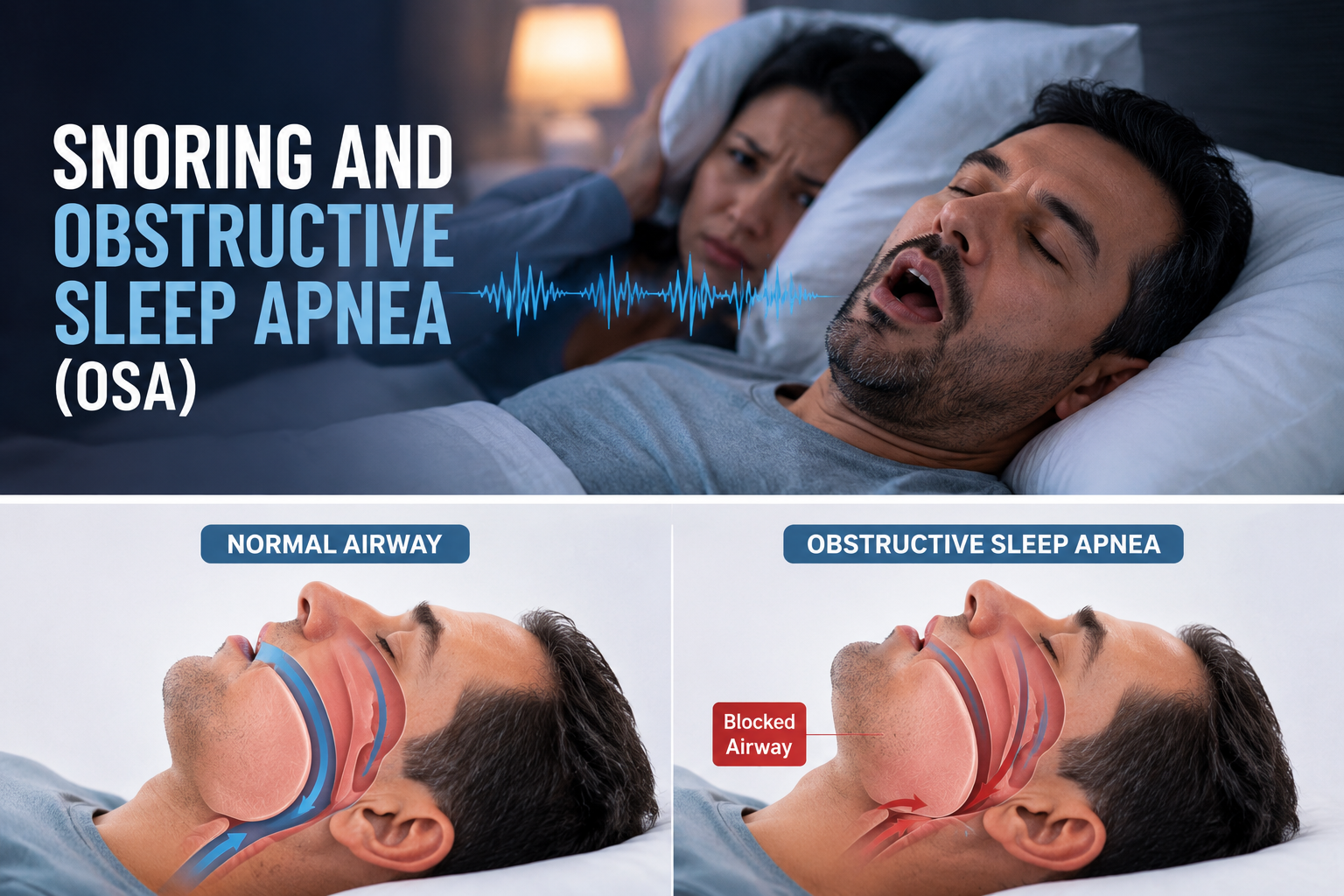
Social Concerns – Snoring can make one’s bed partner experience sleepless nights and fatigue.
Medical Concerns – Snoring disrupts sleep patterns and can be a sign of obstructive sleep apnea. These may deprive the snorer of adequate rest and could increase the likelihood of long-term health problems such as heart disease, lung disease, diabetes, weight gain, and even sudden death.
What is obstructive sleep apnea (OSA)?
Snoring may be a sign of a more serious condition known as obstructive sleep apnea (OSA). OSA is characterized by multiple episodes of pauses in breathing lasting at least 10 seconds at a time, due to upper airway narrowing or collapse. This results in lower amounts of oxygen in the blood, which causes the heart to work harder. It also causes disruption of the natural sleep cycle by causing the patient to frequently arouse from sleep to get more air. This, in turn, makes people feel poorly rested, despite adequate time in bed. Apnea patients may experience 30 to 300 such events per night.
The immediate effect of sleep apnea is that the snorer must sleep lightly and keep the throat muscles tense in order to keep airflow to the lungs. Because the snorer does not get a good rest, he or she may be sleepy during the day, which impairs job performance and makes him or her a hazardous driver or equipment operator. Untreated obstructive sleep apnea increases the risk of developing heart attacks, strokes, diabetes, and many other medical problems.
How is heavy snoring evaluated?
Heavy snorers should seek medical advice to ensure that sleep apnea is not a problem. Heavy snorers include people who snore constantly in any position or who negatively impact a bed partner’s sleep. An otolaryngologist will provide a thorough examination of the nose, mouth, throat, palate, and neck, often using a fiberoptic scope. An examination can reveal if the snoring is caused by anatomical defects leading to nasal obstruction, palate obstruction, or throat obstruction.
A sleep study in a laboratory or at home may be necessary to determine if your snoring is secondary to OSA. This test plays a critical role in sleep apnea diagnosis by measuring breathing interruptions, airway restrictions, and oxygen levels during sleep.
The sleep study measures how many times per hour the patient stops breathing or has a restriction of their airway and monitors oxygen levels in the blood while this is happening. This test is regarded as the “gold standard” in evaluating OSA.
Symptoms and signs of OSA:
- Excessive daytime sleepiness
- Morning headaches
- Recent weight gain
- Awakening in the morning not feeling rested
- Awaking at night feeling confused
- Change in your level of attention, concentration, or memory
- Witnessed pauses in breathing lasting more than 10 seconds
- High blood pressure
- Lung problems
- Heart disease
- History of a stroke
What treatments are available?
Treatment depends on the diagnosis and level(s) of upper airway narrowing. Following a confirmed sleep apnea diagnosis, an ENT specialist can develop a personalized obstructive sleep apnea treatment plan based on the severity of the condition and the location of airway obstruction.
Snoring or OSA may respond to various treatments offered by many ENT surgeons:
- Aggressive weight loss may be all that is required to treat some patients with OSA.
- Obstructive sleep apnea is most often treated with a device that opens the airway with a small amount of positive pressure. CPAP remains one of the most effective forms of obstructive sleep apnea treatment for patients with moderate to severe OSA.
- Another non-invasive technique involves fitting a custom-made oral appliance, which helps pull the lower jaw forward, opening the space behind the tongue. This may be considered an alternative obstructive sleep apnea treatment for certain patients with snoring and/or OSA. An otolaryngologist, dentist, or oral surgeon with expertise in sleep dentistry should fit this appliance.
- Uvulopalatopharyngoplasty (UPPP) is a surgery for treating OSA and may be recommended as an advanced obstructive sleep apnea treatment when non-surgical therapies have not been successful. The surgeon removes excess soft palate tissue and the uvula, thereby opening the airway. In addition, the remaining tissue stiffens as it heals, thereby minimizing tissue vibration and decreasing snoring. The size of the air passage may be further enlarged when a tonsillectomy is added to the procedure.
- Thermal ablation procedures reduce tissue bulk in the nasal turbinates, tongue base, and/or soft palate. This is just a fancy term for shrinking away the excess tissue. These procedures are used for both snoring and OSA. Different methods of thermal ablation include bipolar cautery, laser, coblation, and radiofrequency. These procedures may be done in the operating room or during an office visit. Several treatments may be required.
- Some treatment methods attempt to increase the stiffness of the soft palate without removing tissue. Of the techniques commonly used, injection of irritant material into the soft palate tissue or insertion of stiffening “rods” (pillar implants) can provide a solution.
- Tongue and hyoid suspension devices are another surgical procedure for the treatment of sleep apnea. This surgical technique suspends the muscles of the tongue and/or the hyoid bone forward. This helps to hold the airway open, thereby alleviating an obstructed airway.
Do you recommend the use of over-the-counter devices?
There are hundreds of devices marketed as cures for snoring; none are specifically recommended. Some encourage lying on the side while sleeping, simply using gravity to prevent the tongue from falling back and obstructing the airway. There are those that attempt to hold open the nasal passages, and still others that produce an unpleasant stimulus when snoring occurs. Results from using these devices will differ between patients and occasionally may provide benefit. If symptoms do not improve, we recommend consulting with a trained expert in this field.
Self-help for the light snorer
Adults who suffer from mild or occasional snoring may benefit from any of the following behavioral techniques:
- Adopt a healthy and athletic lifestyle to develop good muscle tone and lose weight.
- Avoid tranquilizers, sleeping pills, and antihistamines before bedtime (cause heavy sleeping and more relaxed muscle tone, leading to obstruction).
- Avoid alcohol for at least four hours and heavy meals or snacks for three hours before going to bed (as above).
- Establish regular sleeping patterns (less likely to cause deep sleep, leading to more relaxed muscle tone).
- Sleep on your side rather than your back (relieves the obstruction of the tongue falling back and blocking the airway).
- Elevate the head of your bed four inches (as above: relies on gravity to keep the tongue from falling back).
If you would like an appointment with one of our physicians at Fort Worth ENT & Sinus please complete an online appointment request or phone 817-332-8848.
FAQS
- How can I tell if my snoring is harmless or a sign of sleep apnea?The most reliable way to determine whether snoring is related to OSA is through a professional evaluation and sleep apnea diagnosis, which may include a physical examination and sleep study. A medical evaluation is the only way to tell the difference with certainty.
- Can obstructive sleep apnea occur even if I’m not overweight?Yes. While excess weight increases risk, OSA can occur in people of normal weight due to airway anatomy, jaw structure, nasal obstruction, or enlarged tonsils. Thin individuals who snore loudly or feel chronically tired should still be evaluated.
- Is snoring in children ever considered normal?Habitual snoring in children is not considered normal. It may indicate enlarged tonsils or adenoids causing obstructed breathing during sleep. Left untreated, this can affect growth, behavior, learning, and cardiovascular health. Any child who snores regularly should be examined by an ENT specialist.
- If I can’t tolerate CPAP, do I still have treatment options?Yes. Alternative obstructive sleep apnea treatment options may include oral appliance therapy, weight management, thermal ablation procedures, tongue-base procedures, or other surgical interventions depending on the cause and severity of the airway obstruction.
- Can untreated sleep apnea affect mental health and daily performance?Yes. Poor sleep quality from untreated OSA can contribute to mood changes, irritability, anxiety, depression, memory problems, and reduced concentration. It can also impair work performance and significantly increase the risk of motor vehicle and workplace accidents.

Dr. Sean Callahan is a Board Certified Otolaryngologist at Fort Worth ENT & Sinus. Dr. Callahan performs surgery in all aspects of otolaryngology including pediatric ENT/Sinus, otology, rhinology, and sinus surgery, head and neck cancer surgery, salivary gland surgery, thyroid and parathyroid surgery, trauma, laryngology, allergy, and sleep medicine. Dr. Callahan completed his otolaryngology residency training at UT Southwestern Medical Center in Dallas in 2012. He was Board Certified by the American Board of Otolaryngology in 2013.
 How Parathyroidectomy Can Help: Insights from Experts