
Summary:
|
Most people never think about calcium until a blood test flags something unusual. But calcium is doing quiet, constant work in your body, helping your muscles contract, your nerves send signals, and your bones stay strong. When the balance shifts, the effects don’t always show up clearly at first. You may just feel “off” for months or even years.
That’s often how hyperparathyroidism begins. One or more of the parathyroid glands start producing excess hormone, pushing calcium levels higher than they should be. Over time, this can lead to fatigue, kidney stones, bone discomfort, and mental fog that’s hard to explain.
Parathyroidectomy, a specialized form of endocrine surgery, is designed to fix that imbalance at its source. Surgeons who routinely perform thyroid surgery and related procedures often describe this operation as one of the most rewarding because patients tend to feel a noticeable difference once recovery is complete.
What is Parathyroidectomy?
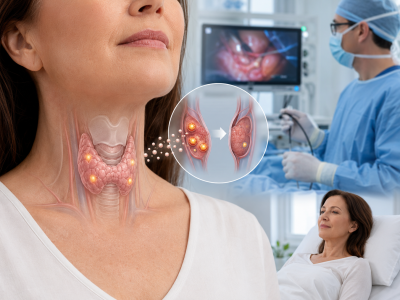
The medical procedure known as parathyroidectomy involves removing one or more parathyroid glands, which have ceased to operate at their normal levels. The glands, which are located behind the thyroid gland, function to maintain calcium homeostasis through their secretion of parathyroid hormone (PTH). The benign growth known as an adenoma, which affects one gland, will begin to produce constant signals that cause increased calcium levels in the body, even when the body does not require such an effect.
Why These Glands Matter
The tiny size of these glands does not diminish their vital function. The body uses these glands to control:
- The calcium levels present in blood
- The process of bone remodeling
- The coordination between muscles and nerves
The body begins to exhibit signs of disorder when it loses control over its regulatory processes.
Conditions That May Lead to Surgery
Doctors usually recommend surgery after confirming the cause through blood tests and imaging. The typical causes include:
- A single overactive gland (parathyroid adenoma)
- Multiple glands that have become enlarged (hyperplasia)
- Uncommon tumors that affect the parathyroid glands (parathyroid cancer)
- Secondary causes that result from renal disorders or vitamin deficiency conditions
The medical condition cannot be completely resolved through medication because surgery needs to be the permanent treatment method.
Procedure Details
Pre-Surgery Preparation: What to Expect
The process of preparation requires simplicity, yet it carries substantial value. The majority of patients undergo the same treatment procedure, which applies to both parathyroid surgery and endoscopic sinus surgery. The following actions will probably become your requirements that you need to follow from your physician’s recommendations:
- You must stop all food and beverage consumption for multiple hours before your surgical procedure.
- You need to stop specific medications, which include blood thinners.
- You must make arrangements for someone who will drive you back home after the procedure.
The surgeon needs to answer practical questions which include how many glands are affected, what surgical technique will be used, and how your recovery process will develop at your particular situation.
Types of Parathyroidectomy Procedures
The approach depends on your diagnosis and imaging results.
Traditional Surgery
The procedure selection process depends on your diagnostic evaluation, together with your imaging outcomes. The procedure starts with a larger incision, which permits the surgeon to assess all four glands. The method proves beneficial because the problem area requires identification before most situations.
Minimally Invasive Surgery
The procedure needs an exact incision, which medical imaging will guide throughout the operation. The method usually means less discomfort and a quicker return to normal activities.
Scarless (Transoral) Technique
The mouth serves as the entry point for this procedure, which results in no visible neck scars. The procedure has limited applicability, yet its use is increasing at specialized medical facilities.
Step-by-Step Surgical Process
On the day of surgery, the process typically follows a predictable pattern:
- Anesthesia is administered so you’re comfortable
- A small incision is made (location depends on technique)
- The abnormal gland is located and removed
- Hormone levels may be checked during surgery to confirm success
- The incision is closed
Most procedures take between one and three hours.
Recovery and Post-Surgery Care
Immediately After Surgery
Many patients go home the same day. Some stay overnight, especially if monitoring is needed.
You might notice:
- A sore throat
- Mild neck stiffness
- Slight hoarseness
These effects are usually temporary and improve within a few days.
Eating and Daily Routine
Soft foods and plenty of fluids are helpful in the first 24–48 hours. There’s no strict diet long-term, but staying hydrated supports healing.
Calcium Levels After Surgery
It’s common for calcium levels to dip temporarily. Your doctor may prescribe supplements to prevent symptoms like tingling or muscle cramps.
Getting Back to Normal
- Light movement: within a couple of days
- Work: usually within 1–2 weeks
- Exercise: gradually, after approval
Patients who’ve gone through sinus surgery preparation often find the recovery advice familiar: rest early, then ease back into their routine.
Risks and Benefits of Parathyroidectomy
Benefits
For many patients, the improvement is noticeable within weeks:
- Less fatigue and better energy
- Reduced bone and joint discomfort
- Lower risk of kidney stones
- Clearer thinking and focus
Some people don’t realize how much the condition affected them until after treatment.
Potential Risks
Complications are uncommon but still worth understanding.
Short-term:
- Sore throat or voice changes
- Minor infection
- Bleeding
Long-term:
- Low calcium levels (temporary or, rarely, prolonged)
- Recurrence of the condition
- Nerve irritation affecting the voice
Working with an experienced endocrine surgery specialist helps minimize these risks.
Long-Term Outlook and Prognosis
Parathyroidectomy is considered highly effective. In most cases, calcium levels return to normal and stay stable.
After Recovery
Follow-up care usually includes:
- Periodic blood tests
- Monitoring calcium and hormone levels
- Occasional imaging if needed
Bone health often improves gradually over time, especially if the condition has been present for a while before surgery.
When to Contact Your Doctor
It’s important to pay attention to your body during recovery.
Reach Out If You Notice:
- Fever or increasing pain
- Trouble swallowing
- Redness or discharge at the incision
Signs of Low Calcium
- Tingling in fingers or lips
- Muscle cramps
- Unusual fatigue
Seek Immediate Help If:
- Breathing becomes difficult
- Swelling increases suddenly
Related Surgical Context: Sinus and ENT Procedures
Patients typically visit ENT specialists multiple times because of their various medical needs throughout their lives. A patient who needs to prepare for endoscopic sinus surgery will undergo medical assessment for both thyroid and parathyroid conditions.
Sinus Surgery Preparation, What to Expect, and Recovery Tips
Before Surgery:
- Must follow all fasting requirements that have been established for him.
- The patient needs to consult his doctor about all medications that he takes.
- Needs to schedule his home recovery time.
After Surgery:
- The patient needs to maintain an elevated head position.
- Must refrain from engaging in strenuous physical activities during the next several days.
- Must take all medications that the doctor has prescribed.
The two medical procedures require different treatments, yet both demand similar preparation processes because advanced planning improves operational efficiency.
Choosing the Right Care Team Matters
The procedure of parathyroidectomy performs silent transformations that affect all aspects of a person’s daily activities. The symptoms that used to appear as separate issues start to disappear when calcium levels reach their normal state. The person experiences increased energy, reduced discomfort, and restored mental clarity.
When you experience ongoing symptoms or your lab results show abnormal findings, you should schedule an extended consultation with a physician who specializes in thyroid and endocrine surgical procedures.
Fort Worth ENT & Sinus provides expert assessments and personalized patient treatment options at its facility. The medical team combines its knowledge of ENT and endocrine medicine to assist patients throughout their diagnosis process.
FAQs
Dr. Sean Callahan is a Board Certified Otolaryngologist at Fort Worth ENT & Sinus. Dr. Callahan performs surgery in all aspects of otolaryngology including pediatric ENT/Sinus, otology, rhinology, and sinus surgery, head and neck cancer surgery, salivary gland surgery, thyroid and parathyroid surgery, trauma, laryngology, allergy, and sleep medicine. Dr. Callahan completed his otolaryngology residency training at UT Southwestern Medical Center in Dallas in 2012. He was Board Certified by the American Board of Otolaryngology in 2013.
 The Recovery Process After a Neck Dissection