
Summary
|
A cancer diagnosis often brings a flood of decisions. Some happen quickly. Others require careful thought and discussion with family, physicians, and care teams. Among the most important decisions for patients with certain head and neck cancers is selecting the right surgeon.
While treatment plans may include radiation therapy, chemotherapy, or targeted therapies, surgery often remains a cornerstone of care. When cancer spreads to lymph nodes in the neck or presents a significant risk of doing so, a neck dissection may be recommended as part of the treatment strategy.
Not all surgical experiences are the same, however. The skill, training, and judgment of the surgeon can influence everything from surgical precision to recovery and long-term outcomes. Understanding the importance of surgeon expertise can help patients make informed decisions during a challenging time.
Understanding Neck Dissection
What Is Neck Dissection?
A neck dissection is a surgical procedure performed to remove lymph nodes and, in some cases, surrounding tissues from the neck. It is most commonly used in the treatment of head and neck cancers, including cancers of the mouth, throat, larynx, salivary glands, and thyroid.
Cancer cells can travel through the lymphatic system and spread to nearby lymph nodes. Removing affected nodes helps physicians determine the extent of disease while also reducing the risk of cancer progression.
Neck dissection procedures have evolved significantly over the years. Advances in surgical techniques now allow many patients to receive effective treatment while preserving important structures responsible for movement, sensation, and appearance.
Types of Neck Dissection
The type of procedure performed depends on the location of the cancer, the extent of lymph node involvement, and the patient’s overall treatment plan.
Radical Neck Dissection
This is the most extensive form of neck dissection. It involves the removal of lymph nodes on one side of the neck along with certain surrounding structures that may be affected by cancer.
Although still necessary in specific situations, radical procedures are generally reserved for advanced cases where cancer involvement is extensive.
Modified Radical Neck Dissection
A modified radical neck dissection removes the lymph nodes while preserving one or more critical structures such as muscles, nerves, or veins whenever possible.
This approach often helps maintain function and improve post-operative quality of life without compromising cancer treatment goals.
Selective Neck Dissection
Selective neck dissection targets only the lymph node groups most likely to contain cancer cells while preserving healthy tissues and structures.
This less extensive approach is frequently used when cancer spread is limited or when preventive treatment is being considered.
The decision regarding which procedure is appropriate requires careful evaluation and considerable surgeon expertise.
The Importance of Surgeon Expertise
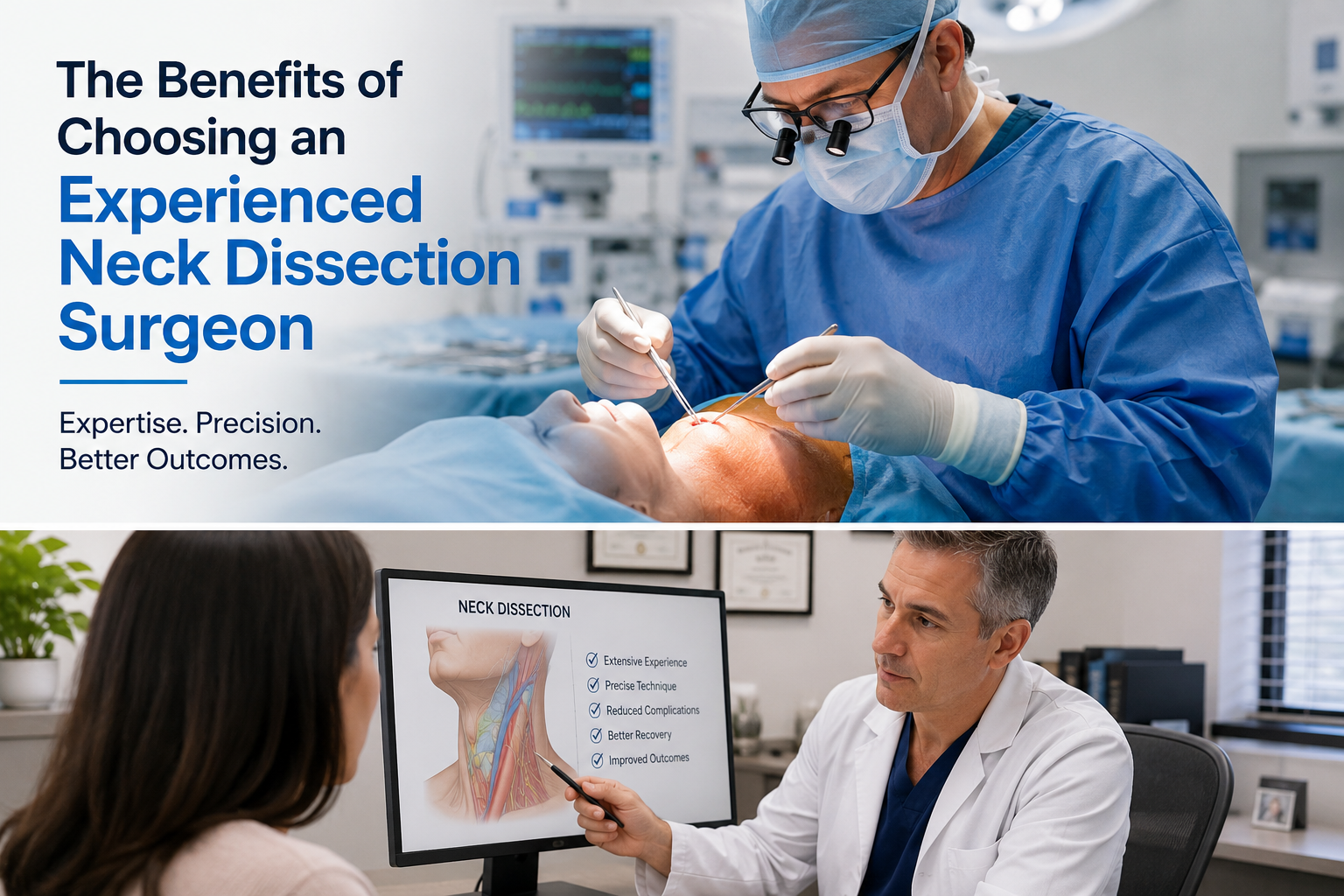
Cancer surgery is rarely routine.
Every patient presents unique anatomy, medical history, and treatment considerations. Even when two patients have the same diagnosis, their surgical plans may differ significantly.
This is why experience matters.
Why Experience Matters in Neck Dissection
Patients often focus on the procedure itself, but the surgeon performing that procedure can have a major impact on the outcome.
Higher Success Rates
Experienced surgeons perform complex procedures regularly and develop a deep understanding of head and neck anatomy.
Years of surgical practice allow them to recognize challenges quickly, anticipate potential complications, and make informed decisions during surgery.
This often contributes to more successful outcomes and improved disease management.
Reduced Complications
The neck contains critical nerves, blood vessels, muscles, and other structures that require careful preservation whenever possible.
Experienced surgeons understand how to navigate these complex areas while minimizing the risk of injury.
Reduced complications can lead to better functional outcomes, fewer hospital readmissions, and improved recovery experiences for patients.
Tailored Surgical Techniques
No two patients are identical.
An experienced surgeon evaluates the location of the cancer, lymph node involvement, previous treatments, and individual anatomy before developing a surgical plan.
This ability to adapt techniques based on patient-specific factors represents an important aspect of surgeon expertise.
Factors to Consider When Choosing a Surgeon
For many patients, choosing surgeons can feel overwhelming.
The decision often involves balancing recommendations, credentials, hospital affiliations, and personal comfort.
Several factors can help guide the process.
Qualifications and Credentials
Start by reviewing the surgeon’s education, training, and board certifications.
Surgeons who specialize in head and neck surgery often complete additional fellowship training focused on complex cancer procedures.
Specialized training can provide valuable experience with advanced surgical techniques and cancer management.
Experience with Neck Dissection
Volume matters.
A surgeon who performs neck dissection procedures regularly may have greater familiarity with both routine and complex cases.
Patients should feel comfortable asking questions such as:
- How many neck dissection surgeries do you perform each year?
- What types of neck dissection procedures do you commonly perform?
- How do you approach complex cases?
Open conversations can help patients better understand a surgeon’s experience and approach.
Patient Reviews and Testimonials
While every patient’s experience is unique, reviews and testimonials can offer insight into communication style, patient satisfaction, and overall care quality.
Positive feedback often reflects strong physician-patient relationships and comprehensive support throughout treatment.
Multidisciplinary Approach
Cancer treatment frequently involves more than one specialist.
The most effective care plans often include collaboration among:
- Head and neck surgeons
- Medical oncologists
- Radiation oncologists
- Radiologists
- Speech and swallowing specialists
- Rehabilitation professionals
A multidisciplinary approach helps ensure patients receive coordinated and comprehensive care throughout their treatment journey.
Benefits of Choosing an Experienced Neck Dissection Surgeon
1. Improved Surgical Outcomes
Perhaps the most significant advantage of selecting an experienced surgeon is the potential for improved surgical results.
Extensive experience allows surgeons to navigate challenging anatomy with confidence and precision.
This often contributes to more successful outcomes, including effective disease management and preservation of important structures.
2. Personalized Care and Treatment Plans
Cancer treatment should never follow a one-size-fits-all approach.
Experienced surgeons recognize the importance of individualized care.
They take time to review diagnostic imaging, pathology reports, medical history, and patient goals before recommending treatment.
Personalized care helps patients feel informed, supported, and actively involved in decision-making.
3. Enhanced Recovery Time
Surgical precision can influence recovery.
Careful tissue handling, strategic surgical planning, and efficient technique may reduce trauma to surrounding structures.
Many patients benefit from smoother recoveries, shorter hospital stays, and earlier returns to daily activities.
While recovery timelines vary, an experienced surgeon can help optimize the process.
4. Comprehensive Post-Operative Care
Surgery does not end when the procedure is complete.
Follow-up care is a critical part of treatment.
Experienced surgeons understand how to monitor healing, manage complications, coordinate rehabilitation services, and address patient concerns throughout recovery.
This continuity of care often contributes to better long-term results and greater patient confidence.
Looking Beyond the Procedure
Patients often focus on the operation itself, but surgery represents only one chapter of the treatment journey.
The surgeon’s ability to communicate clearly, coordinate care, and provide ongoing support can significantly affect the overall experience.
Trust is particularly important during cancer treatment.
Patients should feel comfortable asking questions, discussing concerns, and understanding the reasoning behind treatment recommendations.
A strong physician-patient relationship can help reduce uncertainty and improve confidence throughout the process.
Conclusion
A neck dissection is a complex procedure that plays an important role in the treatment of many head and neck cancers. While advances in surgical technology continue to improve patient care, the experience and judgment of the surgeon remain among the most important factors influencing outcomes.
When choosing surgeons, patients should look beyond credentials alone and consider factors such as experience, communication, multidisciplinary collaboration, and commitment to personalized care. Strong surgeon expertise can contribute to safer procedures, smoother recoveries, and more successful outcomes.
At Fort Worth ENT & Sinus, patients receive comprehensive head and neck care from experienced specialists dedicated to delivering individualized treatment plans and compassionate support throughout every stage of care. If you or a loved one has been advised to undergo a neck dissection procedure, scheduling a consultation can help you better understand your options and make informed decisions about treatment.
FAQs
- What is the role of a neck dissection surgeon?A neck dissection surgeon removes lymph nodes and potentially affected tissues in the neck to help treat or manage head and neck cancers. They also guide patients through diagnosis, treatment planning, surgery, and recovery.
- How do I find a qualified neck dissection surgeon?Look for board-certified specialists with training in head and neck surgery, significant procedural experience, positive patient feedback, and involvement in multidisciplinary cancer care.
- What are the risks associated with neck dissection?Potential risks may include infection, bleeding, nerve injury, shoulder weakness, swelling, scarring, or changes in sensation. Experienced surgeons work to minimize these risks through careful planning and technique.
- How long is the recovery period after neck dissection?Recovery varies depending on the extent of surgery and overall health. Many patients begin resuming normal activities within several weeks, although complete recovery may take longer.
- Can I have a neck dissection if I have other health conditions?In many cases, yes. Your surgeon will evaluate your medical history, current health conditions, and treatment goals to determine the safest and most effective approach.

Dr. Sean Callahan is a Board Certified Otolaryngologist at Fort Worth ENT & Sinus. Dr. Callahan performs surgery in all aspects of otolaryngology including pediatric ENT/Sinus, otology, rhinology, and sinus surgery, head and neck cancer surgery, salivary gland surgery, thyroid and parathyroid surgery, trauma, laryngology, allergy, and sleep medicine. Dr. Callahan completed his otolaryngology residency training at UT Southwestern Medical Center in Dallas in 2012. He was Board Certified by the American Board of Otolaryngology in 2013.
 Exploring the Excision of Lip and Tongue Lesions