
Summary:
|
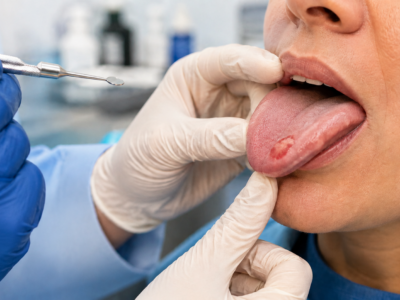
People really don’t look at a little sore, or a bump, hiding inside the mouth. In plenty of cases, these changes are pretty harmless and then they fade away on their own. Still, if a problem hangs around, starts getting larger, turns into something painful, or ends up messing with normal things like speaking, eating, and swallowing then it deserves attention.
The mouth has delicate tissues, and those can get hit by irritation, infections, trauma, and sometimes by abnormal cell growth. A lot of oral lesions are benign, yes, but some of them need proper assessment so the right care, or removal if needed, can be decided.
If the lesion stays the same for a long time, or if there are worries about malignancy, an ENT specialist might suggest the excision of a tongue lesion or a lip lesion. The goal is to confirm what it is, establish a diagnosis, and also reduce the risk of further trouble.
Common Types of Oral Lesions
Oral lesions can appear on the tongue, lips, cheeks, gums, or the floor of the mouth. They vary in size, appearance, and severity.
Aphthous Ulcers
Commonly known as canker sores, aphthous ulcers are painful lesions that develop inside the mouth. Although they often heal on their own, recurring ulcers may require further evaluation.
Fibromas
Fibromas are benign growths that typically develop as a result of chronic irritation or trauma. They may appear on the tongue, gums, or inner cheeks and can be removed if they become bothersome.
Leukoplakia
Leukoplakia appears as white patches within the mouth that cannot be easily scraped away. While many cases are benign, some may contain precancerous changes, making professional evaluation important.
Canker Sores
Canker sores can develop on the tongue or lips and may cause discomfort while eating, drinking, or speaking. Persistent sores should be examined by a healthcare provider.
When Is the Excision of a Tongue Lesion Recommended?
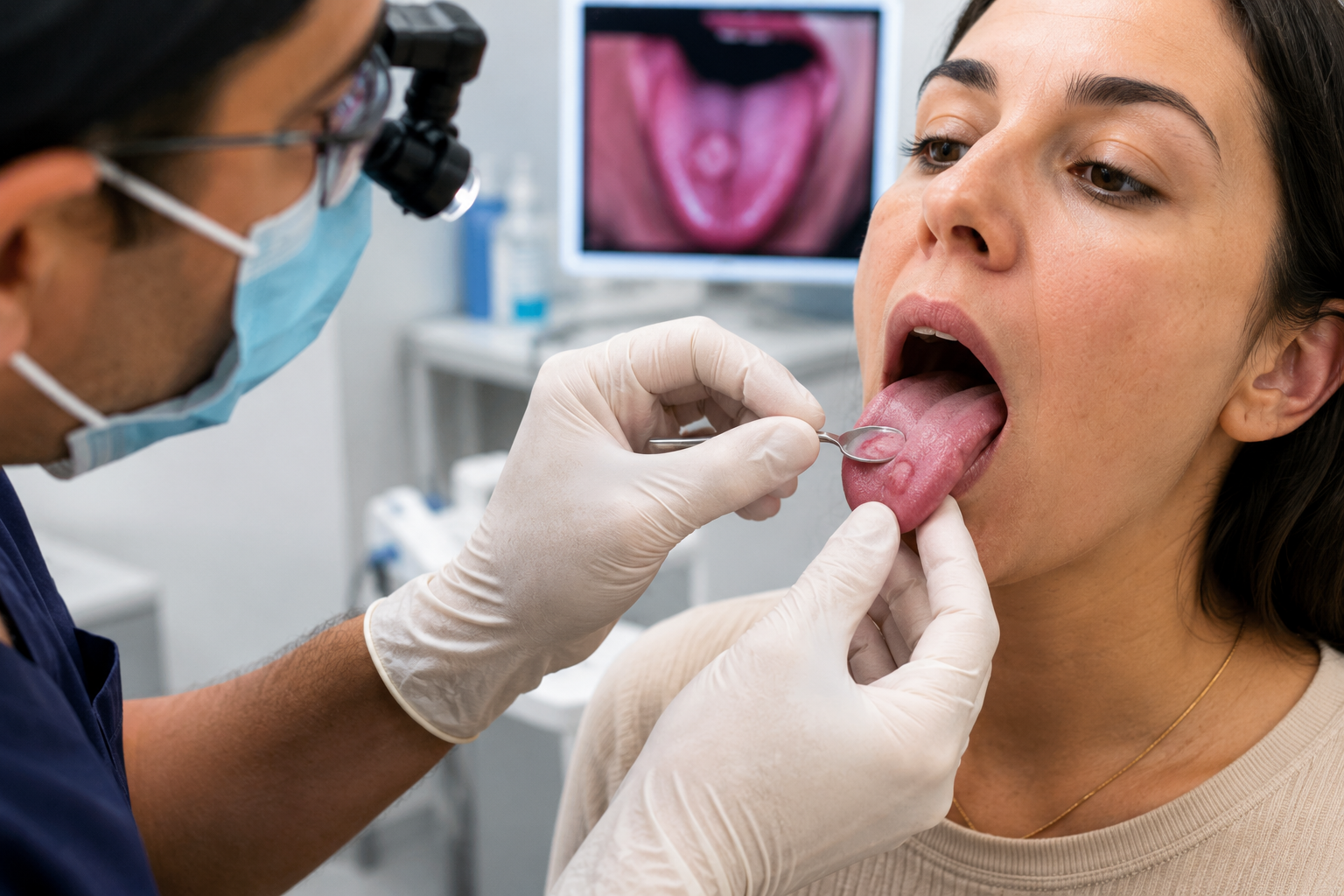
Not every lesion requires surgical removal. However, there are situations where the excision of a tongue lesion becomes an important part of diagnosis and treatment.
Persistent Lesions
Any lesion that remains present for more than two weeks without signs of healing should be evaluated. Chronic oral lesions may require biopsy or removal to determine the underlying cause.
Suspicion of Cancer
Some oral lesions can display characteristics associated with oral cancer, including irregular borders, rapid growth, ulceration, or changes in color. Surgical removal allows tissue to be examined by a pathologist.
Functional Impairment
Lesions located on the tongue may interfere with normal speech, chewing, or swallowing. Removal may improve comfort and restore normal oral function.
Surgical Options for Excision
Advancements in ENT surgery have provided several effective surgical options for treating tongue and lip lesions. The best approach depends on the size, location, and nature of the lesion.
Traditional Surgical Excision
Traditional surgical excision remains one of the most common treatment methods.
During this procedure, the surgeon carefully removes the lesion using a scalpel while preserving as much healthy tissue as possible. The excised tissue is often sent to a laboratory for pathological evaluation.
This technique is widely used because it allows complete removal and provides a specimen for accurate diagnosis.
Laser Surgery
Laser technology offers a minimally invasive alternative for certain oral lesions.
The focused laser beam precisely removes abnormal tissue while minimizing bleeding and reducing damage to surrounding structures. Many patients experience less discomfort and swelling following laser procedures.
Electrosurgery
Electrosurgery uses controlled electrical currents to remove tissue and manage bleeding simultaneously.
This technique is particularly useful for vascular lesions and situations where precise tissue control is required.
An ENT specialist will determine which of these surgical options is most appropriate based on the patient’s condition and treatment goals.
What to Expect During the Procedure
The procedure is typically performed on an outpatient basis.
Depending on the size and location of the lesion, local anesthesia, sedation, or general anesthesia may be used. Once the area is numb, the surgeon removes the lesion and ensures proper control of bleeding.
Most procedures are completed within a relatively short period, allowing patients to return home the same day.
Understanding the Recovery Process
The recovery process following tongue lesion excision varies from patient to patient.
Factors that influence healing include the size of the lesion, surgical technique used, overall health, and adherence to post-operative instructions.
Most patients experience mild soreness and swelling during the first several days after treatment.
Pain Management
Some discomfort is expected after surgery.
Prescription or over-the-counter pain medications may be recommended to help manage symptoms during the early stages of healing.
Dietary Adjustments
Patients are often advised to follow a soft-food diet for several days.
Foods such as yogurt, mashed potatoes, smoothies, and soups can help minimize irritation while allowing the surgical site to heal.
Spicy, acidic, or crunchy foods should generally be avoided until healing progresses.
Oral Hygiene
Good oral hygiene plays an important role in preventing infection.
Patients may be instructed to rinse gently with salt water or use a prescribed mouthwash. Care should be taken to avoid disrupting the healing tissue.
Healing Time
The healing time depends on the extent of the procedure.
Smaller lesions may heal within one to two weeks, while larger excisions may require several weeks for complete recovery.
Follow-up appointments allow the surgeon to monitor healing and discuss pathology results if a biopsy was performed.
Potential Risks and Complications
Like any surgical procedure, the excision of a tongue lesion carries some risks.
Potential complications may include:
- Bleeding
- Infection
- Temporary swelling
- Pain or discomfort
- Delayed healing
- Scar formation
Fortunately, serious complications are uncommon when procedures are performed by experienced ENT specialists and post-operative instructions are followed carefully.
Conclusion
While many oral lesions are harmless, persistent growths, ulcers, or abnormal tissue changes should never be ignored. Early evaluation helps determine whether a lesion requires monitoring, biopsy, or surgical removal.
The excision of a tongue lesion can provide both diagnostic clarity and therapeutic benefit, particularly when lesions affect speech, swallowing, or raise concerns about cancerous changes.
At Fort Worth ENT & Sinus, our specialists provide comprehensive evaluation and treatment for oral lesions using advanced diagnostic techniques and modern surgical options.
If you have noticed a persistent lesion on your tongue, lip, or elsewhere in your mouth, schedule an appointment today to receive expert care and personalized treatment recommendations.
FAQs
- What is the excision of a tongue lesion?The excision of a tongue lesion is a surgical procedure where abnormal tissue on the tongue is taken away for treatment, diagnosis, or biopsy reasons.
- What reasons are there to excise oral lesions?Oral lesions might be removed if they stay for a long time, cause pain, get in the way of speaking or swallowing, or show signs that cause real worries about malignancy.
- What kind of anesthesia is used during excision?Depending on how big the lesion is and where it sits, local anesthesia can be used, or sedation, or sometimes general anesthesia too.
- How long is the recovery after excision?Most people see important healing within about one to two weeks though for larger lesions, recovery may take longer, and it can feel more drawn out than expected.
- Are there risks with excision surgery?Risks may include bleeding, infection, swelling, soreness, and slower healing. That said, complications are usually uncommon when proper post-operative care is followed, and when the team monitors things.
Dr. Sean Callahan is a Board Certified Otolaryngologist at Fort Worth ENT & Sinus. Dr. Callahan performs surgery in all aspects of otolaryngology including pediatric ENT/Sinus, otology, rhinology, and sinus surgery, head and neck cancer surgery, salivary gland surgery, thyroid and parathyroid surgery, trauma, laryngology, allergy, and sleep medicine. Dr. Callahan completed his otolaryngology residency training at UT Southwestern Medical Center in Dallas in 2012. He was Board Certified by the American Board of Otolaryngology in 2013.
 Advanced Treatments for Perforated Eardrum